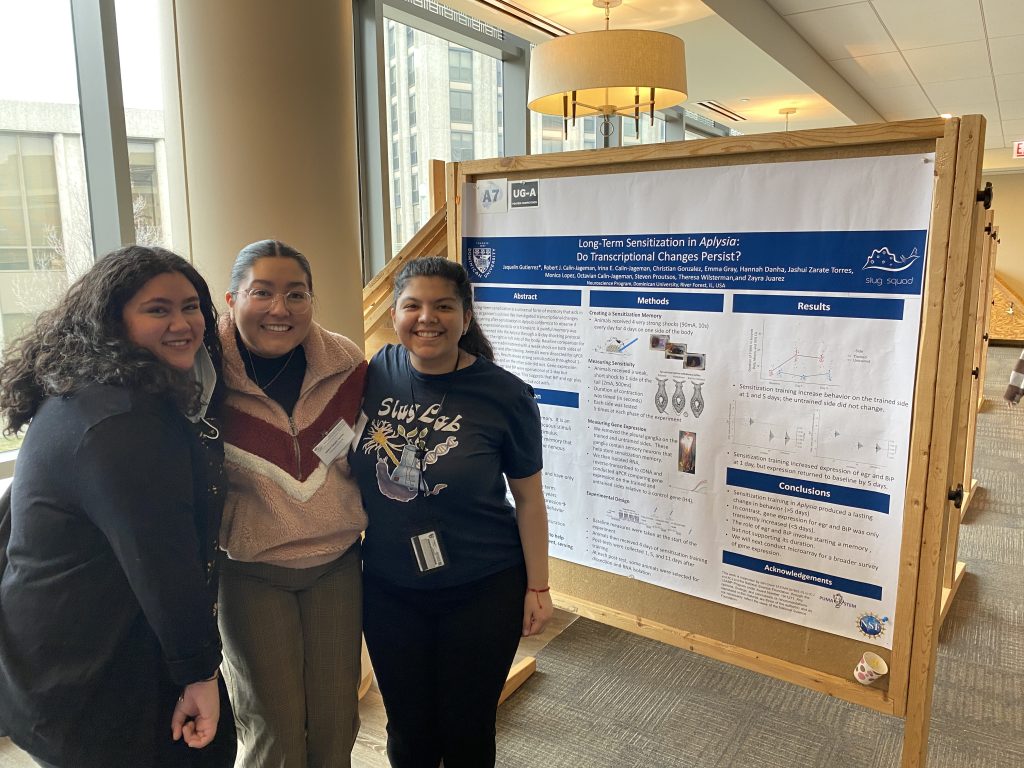
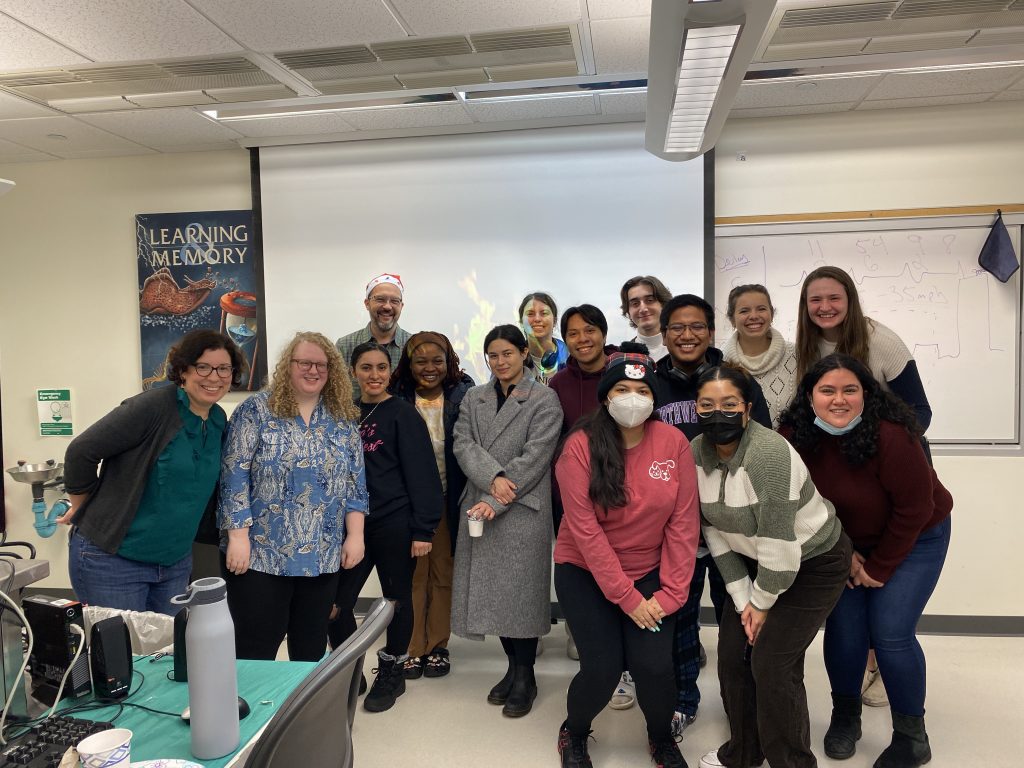
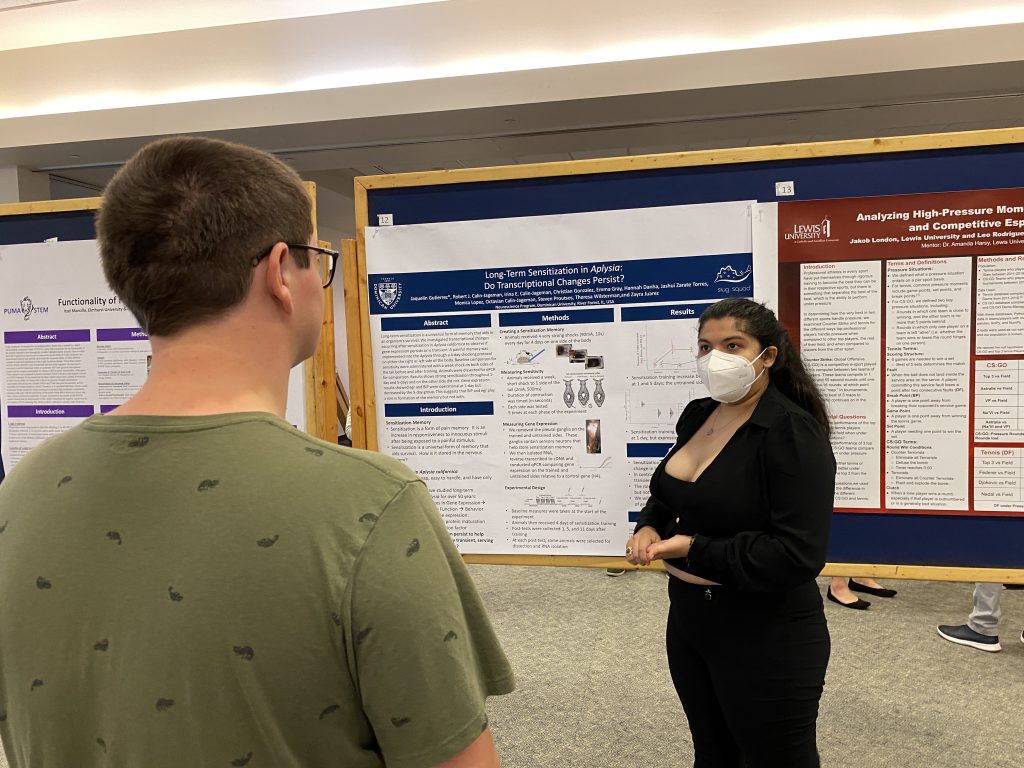
Congrats to SlugLab alum Carys McFaul, who has been awarded Dominican’s Mulroy Excellence Award, the highest honor for a graduating senior! Carys will speak at commencement on 5/9/2026… looking forward to it. (Yes, this is the same Carys McFaul who won 1st place at the cSFN meeting this spring… Carys is a superstar!)
SlugLab in the News!
The most recent paper from the SlugLab was written up by The Transmitter:
Really exciting to see this level of interest in our work! Big thanks to Siddhant Pusdekar for the thoughtful interview and writeup.
The article is about our paper last month:
Rosiles, Tania, Melissa Nguyen, Robert J. Calin-Jageman, and Irina E. Calin-Jageman. “Transcriptional Changes Fade Prior to Long-Term Memory for Sensitization of the Aplysia Siphon-Withdrawal Reflex.” Eneuro, March 9, 2026, ENEURO.0477-25.2026. https://doi.org/10.1523/ENEURO.0477-25.2026.
Where have you gone, early transcriptional changes?
The slug lab has a new paper out, again with student co-authors (Tania Rosiles and Melissa Nguyen, congrats!):
Rosiles, Tania, Melissa Nguyen, Robert J. Calin-Jageman, and Irina E. Calin-Jageman. “Transcriptional Changes Fade Prior to Long-Term Memory for Sensitization of the Aplysia Siphon-Withdrawal Reflex.” Eneuro, March 9, 2026, ENEURO.0477-25.2026. https://doi.org/10.1523/ENEURO.0477-25.2026.
It was a long road for this project… we started it in 2016! But with Covid and lots of other disruptions it took a long while to all the way to publication. Time for some well-aged champagne.
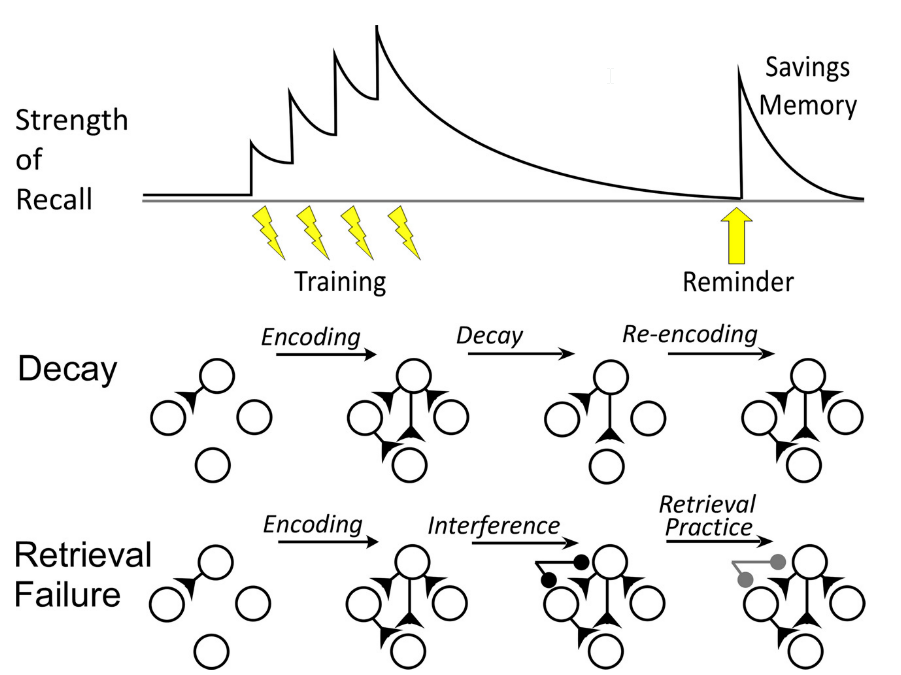
The wait has been worth it in part because this project is really interesting. We have previously shown that forming a new long-term sensitization produces remarkable changes in gene expression within 1 day of training, with clear up- and down-regulation of almost 1200 distinct transcripts (that’s nearly 5% of all the gene models in the Aplysia genome). In this project, we tracked these genes to 5 days after training, a time point where the memory is partly, but not fully forgotten. To our surprise, we found that only 4 of the transcripts regulated 1 day after training were still regulated 5 days after training: 99% were no longer significantly regulated. This wasn’t due to low power: we used N = 16 paired samples and we were even able to show that 99% of transcripts showed a statistically-significant decline in regulation from day 1 to day 5. This wasn’t just about forgetting — we found the same result even when isolating to the 8 samples from animals that had shown the least forgetting. No, our results show that some aspect of the initial transcriptional response to learning is greatly modified/attenuated over time, even while the memory remains expressed! This could mean the locus of storage changes (gene expression changes continue, but in different neurons than at first), that it is refined (only a few neurons sustain the gene expression changes), or perhaps that it is offset (whatever changes that occur in memory-storing neurons are then offset by non-storing neurons to keep overall transcription as it was before)… all exciting possibilities to explore!
This paper marks the 12th paper from the SlugLab.. a nice dozen of papers since our first successful project in 2012. That’s pretty incredible for our student-powered lab! For anyone wanting the boxed set, here’s our current complete bibliography:
Bonnick, Kristine, Karla Bayas, Dmitry Belchenko, et al. “Transcriptional Changes Following Long-Term Sensitization Training and In Vivo Serotonin Exposure in Aplysia Californica.” PLoS ONE 7, no. 10 (2012): e47378. https://doi.org/10.1371/journal.pone.0047378.
Calin-Jageman, Robert J., Bryan Gonzalez Delgadillo, Elise Gamino, et al. “Evidence of Active-Forgetting Mechanisms? Blocking Arachidonic Acid Release May Slow Forgetting of Sensitization in Aplysia.” Research Article: New Research. eNeuro 11, no. 4 (2024). https://doi.org/10.1523/ENEURO.0516-23.2024.
Calin-Jageman, Robert J., Theresa Wilsterman, and Irina E. Calin-Jageman. “Transcriptional Regulation Underlying Long-Term Sensitization in Aplysia.” In Oxford Research Encyclopedia of Neuroscience. 2024. https://doi.org/10.1093/acrefore/9780190264086.013.499.
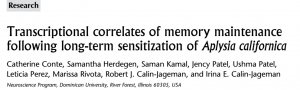
Conte, Catherine, Samantha Herdegen, Saman Kamal, et al. “Transcriptional Correlates of Memory Maintenance Following Long-Term Sensitization of Aplysia Californica.” Learning & Memory 24, no. 10 (2017): 502–15. https://doi.org/10.1101/lm.045450.117.
Cyriac, Ashly, Geraldine Holmes, Jamie Lass, Dmitry Belchenko, Robert J. Calin-Jageman, and Irina E. Calin-Jageman. “An Aplysia Egr Homolog Is Rapidly and Persistently Regulated by Long-Term Sensitization Training.” Neurobiology of Learning and Memory 102 (May 2013): 43–51. https://doi.org/10.1016/j.nlm.2013.03.008.
Herdegen, Samantha, Catherine Conte, Saman Kamal, Robert J. Calin-Jageman, and Irina E. Calin-Jageman. “Immediate and Persistent Transcriptional Correlates of Long-Term Sensitization Training at Different Cns Loci in Aplysia Californica.” PLoS ONE 9, no. 12 (2014): e114481. https://doi.org/10.1371/journal.pone.0114481.
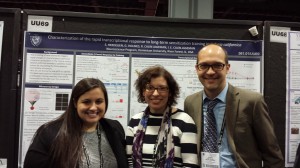
Herdegen, Samantha, Geraldine Holmes, Ashly Cyriac, Irina E. Calin-Jageman, and Robert J. Calin-Jageman. “Characterization of the Rapid Transcriptional Response to Long-Term Sensitization Training in Aplysia Californica.” Neurobiology of Learning and Memory 116 (December 2014): 27–35. https://doi.org/10.1016/j.nlm.2014.07.009.
Holmes, Geraldine, Samantha Herdegen, Jonathan Schuon, et al. “Transcriptional Analysis of a Whole-Body Form of Long-Term Habituation in Aplysia Californica.” Learning & Memory 22, no. 1 (2014): 11–23. https://doi.org/10.1101/lm.036970.114.
Patel, Ushma, Leticia Perez, Steven Farrell, et al. “Transcriptional Changes before and after Forgetting of a Long-Term Sensitization Memory in Aplysia Californica.” Neurobiology of Learning and Memory 155 (November 2018): 474–85. https://doi.org/10.1016/j.nlm.2018.09.007.
Perez, Leticia, Ushma Patel, Marissa Rivota, Irina E. Calin-Jageman, and Robert J. Calin-Jageman. “Savings Memory Is Accompanied by Transcriptional Changes That Persist beyond the Decay of Recall.” Learning & Memory 25, no. 1 (2018): 45–48. https://doi.org/10.1101/lm.046250.117.
Rosiles, Tania, Melissa Nguyen, Robert J. Calin-Jageman, and Irina E. Calin-Jageman. “Transcriptional Changes Fade Prior to Long-Term Memory for Sensitization of the Aplysia Siphon-Withdrawal Reflex.” Eneuro, March 9, 2026, ENEURO.0477-25.2026. https://doi.org/10.1523/ENEURO.0477-25.2026.
Rosiles, Tania, Melissa Nguyen, Monica Duron, et al. “Registered Report: Transcriptional Analysis of Savings Memory Suggests Forgetting Is Due to Retrieval Failure.” Eneuro 7, no. 6 (2020): ENEURO.0313-19.2020. https://doi.org/10.1523/ENEURO.0313-19.2020.
SlugLab Triumph – Carys McFaul wins 1st place at the 2026 cSFN Poster Competition
Last week the SlugLab carried on the annual tradition of attending the Chicago Society for Neuroscience meeting. It’s a wonderful regional meeting — great keynote speakers, fun poster sessions, and lots of great programming, especially for students. We actually bring the entire Dominican University Neurobiology class to this meeting, and it’s been a great way for students to get to engage directly with the neuroscience community in Chicago.
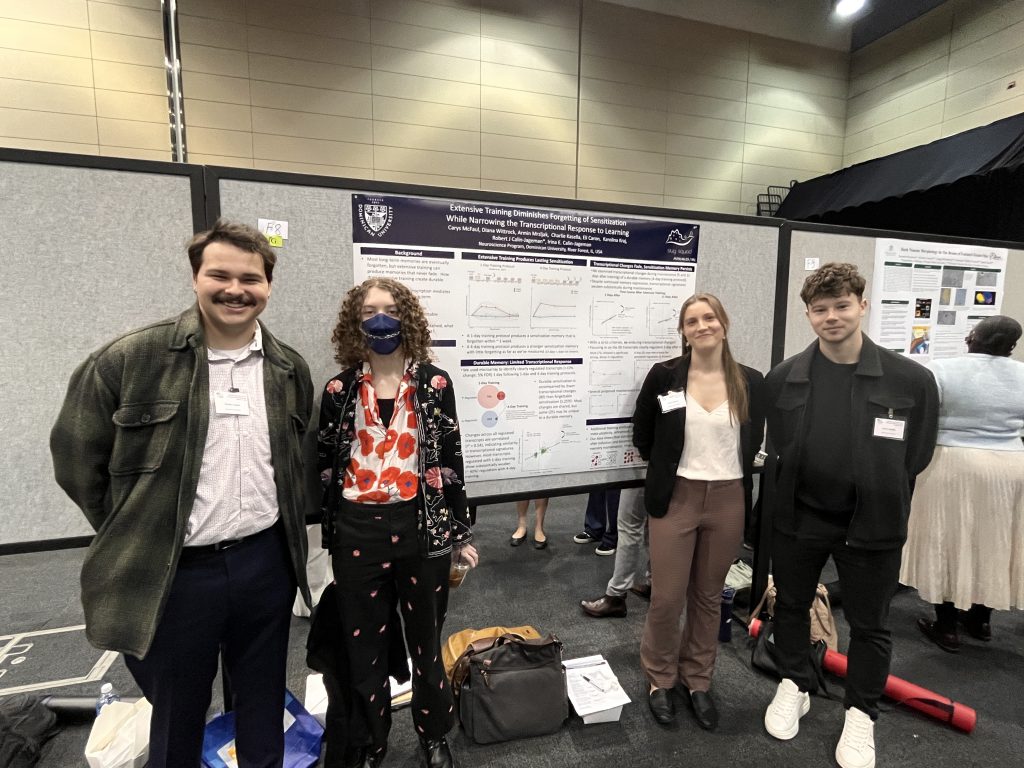
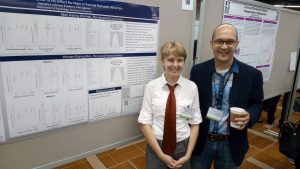
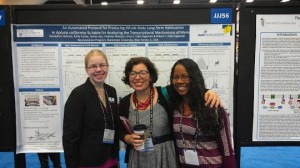
This year was especially notable: SlugLab member Carys McFaul won 1st place in the undergraduate poster presentation for the work she presented examining the molecular correlates of forgettable vs. unforgettable forms of sensitization memory. Congrats, Carys! It was a well-deserved honor, as the project is fascinating and Carys’ presentation skills are formidable.


For the project: Most memories (even long-term ones) fade, becoming progressively harder to recall. But with extended training memories can enter the “permastore”, becoming very resistant to forgetting. Why? What is physically different between a “forgettable” memory and the forgetting-resistant memories produced by enhanced training. To find we gave Aplysia standard sensitization training (1 day of training) and enhanced training (4 days of training). As expected, there was a huge training effect: with 1 day of training the memory was strongly expressed 1 day later but faded completely within 1 week; with the enhanced training the memory was strongly expressed for 11 days with almost no decrease in strength. We then used microarray to characterize gene expression 1, 5, and 11 days after enhanced training. We found two fascinating things: 1) enhanced training seems to produce fewer changes in gene expression than standard training and 2) almost all of the transcriptional chances produced by enhanced training fade quickly, with very little of the pattern of regulation evident 1 day after training still intact at 5 and 11 days after training. What and what? We’re still trying to think this through. The fact that more training produces less regulation is intriguing — maybe the longer training continues the more focused the transcriptional changes become, perhaps there are even transcriptional changes that get shut down that would otherwise have promoted forgetting. Maybe? And for the rapid decay, that is really surprising: are there offsetting changes that keep memory a 0-sum game, or is there no further need of transcriptional changes to maintain a memory… not sure!
What we *are* sure about is that Carys has done an outstanding job, both in the lab and beyond, and that we’re very proud and excited for her win.
We started bringing students to the cSFN conference in 2009. There have been 3 undergraduate poster awards each year, so that is 51 total awards in the 17 years we’ve been attending (maybe 3 less than that due to Covid?). In that time, DU students have won 5 awards: Mary Petrosko won 2nd place in 2009, Kristine Bonnick won 3rd in 2010, Tim Lazicki won 1st in 2010, Leticia Perez won 1st in 2018, and Carys is the first-place winner for 2026. That means Dominican students have won 10% of all the awards since we started attending. Not bad given that cSFN draws undegrads from University of Chicago, Northwestern, Loyola, UIC, DePaul, Lake Forest, Augustana, and more… we’re just a tiny, tiny fraction of all the neuroscience students in the region… but Dominican keeps crushing it at cSFN!
Beyond the SlugLab – DU Neuro major presentation at the 2025 International Neuropsychological Society meeting
For over a decade the SlugLab has been a proving ground for Dominican University STEM majors to gain hands-on experience conducting neuroscience research. But we’re not the only lab on campus and we’re not the only connection Dominican has for students to get involved with STEM.
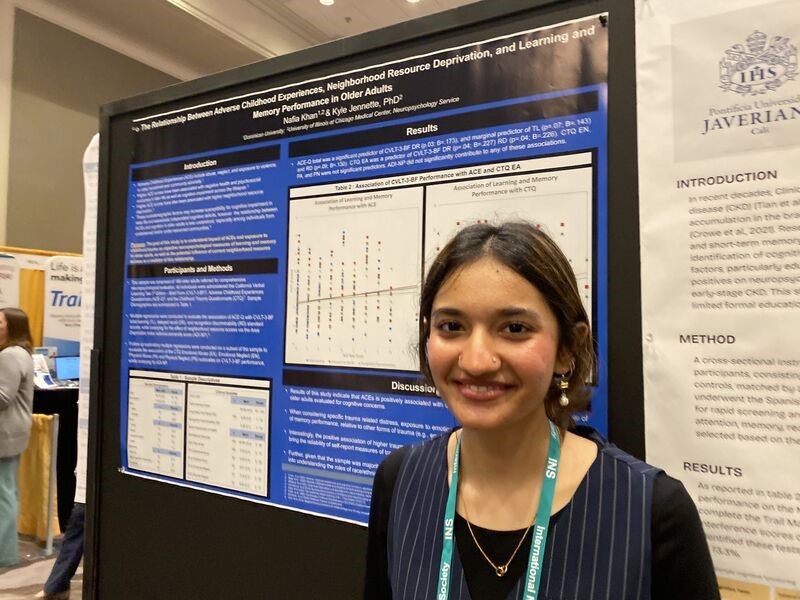
Here’s an example: during the summer of 2024, Dominican neuroscience major Nafia Khan completed a Dominican-sponsored research internship with Dr. Kyle Jennette at the UIC neuropsych clinic. Nafia got to learn about neuropsychology, the clinic, and dive into analyzing data that the clinic had collected across a diverse population of patients. Nafia developed a project and it was so strong that it was accepted for presentation at the 2025 International Neuropsychological Society meeting. DU helped fund Nafia to attend. In addition to great traffic at their poster, Nafia attended sessions, volunteered with the conference, and did lots of amazing networking. Photo below!
Here’s the title/citation for Nafia’s presentation:
Khan, N., Orleans, N., Olu-Lawal, O., Singam, M. Dumett Torres, E., Phillips, M., Cerny, B., Soble, J., Pliskin, N., Song, W. & Jennette, K. (2025, February) The relationship between adverse childhood experiences, neighborhood resource deprivation, and learning and memory performance in older adults with primary memory complaints. Abstract accepted for presentation at annual meeting of the International Neuropsychological Society, New Orleans, LA.
Congrats to Nafia, to Dr. Jennette’s lab, and to all the folks at DU who helped make this happen. Just one example, but a great one!

SlugLab Wedding Bells
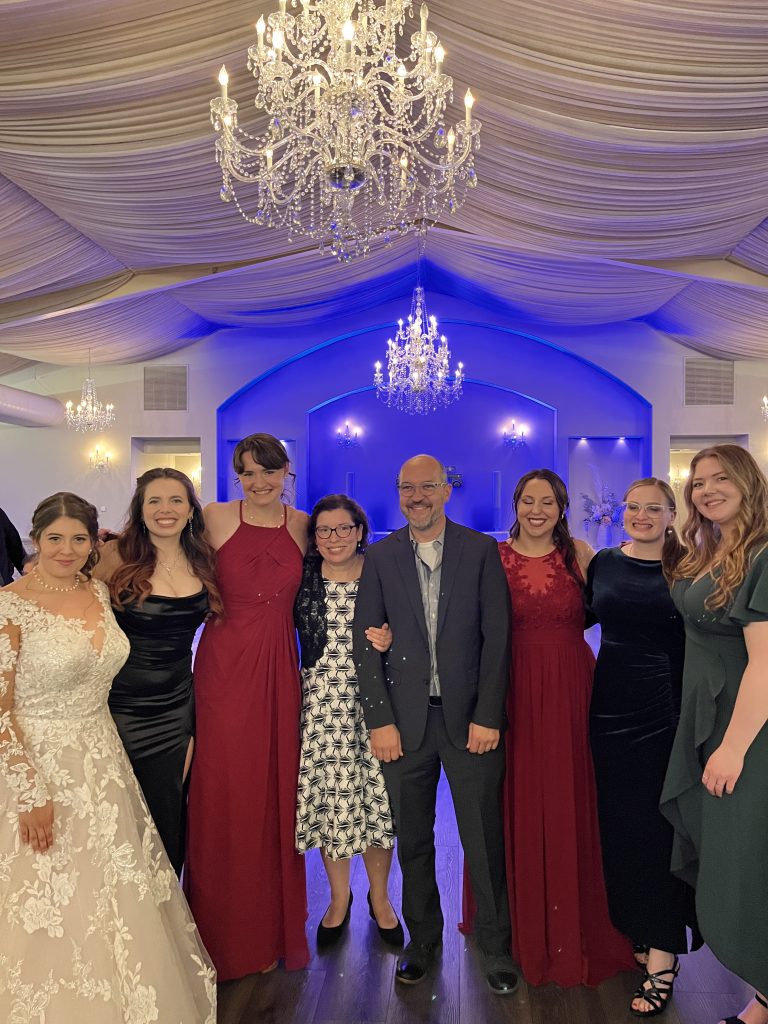
This past weekend was a milestone for the SlugLab — Irina and I attended the wedding of honorary Sluglab alum Catherine (Cat) Klostermann who tied the knot with Ryan Fagan (not a DU alum, but nevertheless a decent enough dude). In attendance were many DU and sluglab alumns, including Hannah Gordon who is now 4 years into her PhD studies at Notre Dame, Theresa Wilsterman who is working at Loyola Medical while applying to graduate school, Delaney McRiley who is working at a lab in Yale while applying to medical school, and Allyson Dilday, neuroscience major!
Congrats, Cat and Ryan — we wish you many happy years of a love and friendship.

SlugLab at SFN 2024
This year the Society for Neuroscience meeting came to the SlugLab’s backyard: Chicago!
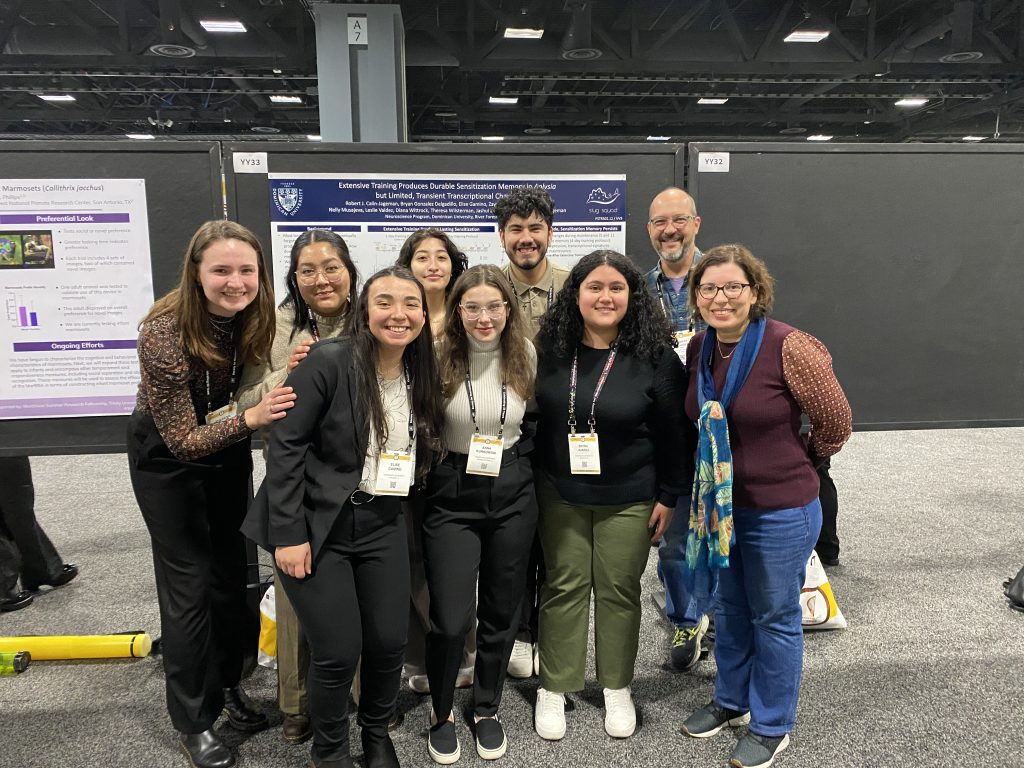
We had a busy and really successful conference. SlugLab members Nelly Musajeva, Elise Gamino, Carys McFaul, and Diana Wittrock attended and got the chance to hear lots of neuroscience while also presenting the amazing work they’ve been doing in the lab.
With the SFN meeting being so big and sprawling, we had lots of chances to present:
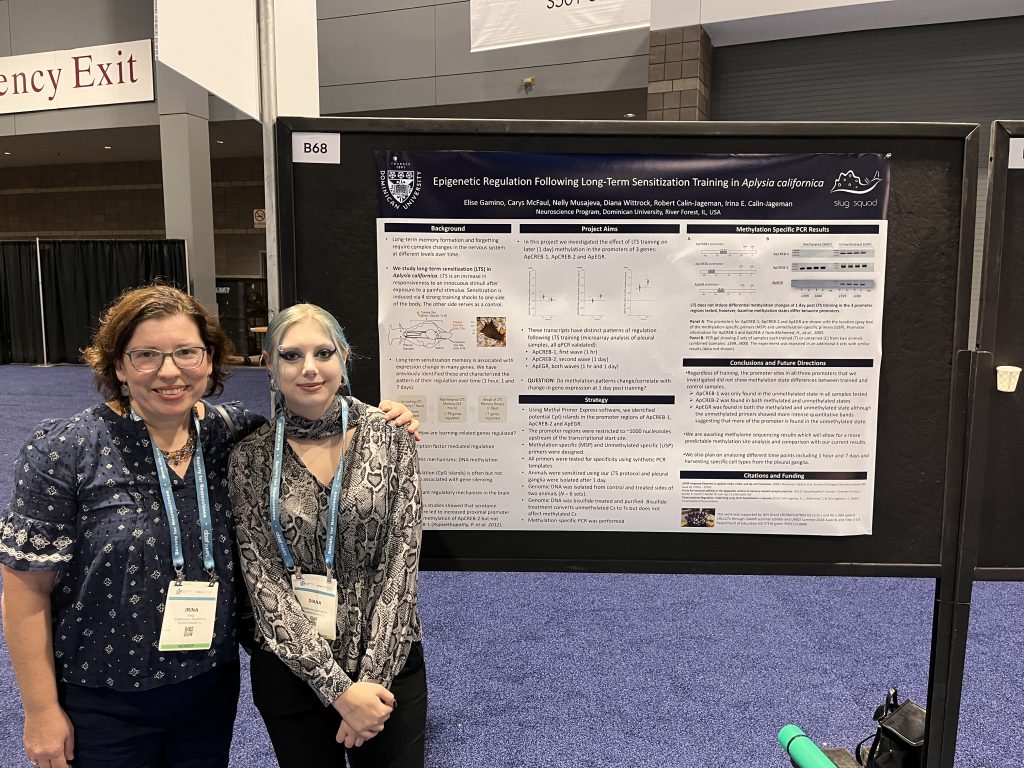
- We presented two posters during the Molecular and Cellular Cognition pre-meeting, talking about the paper we published showing that arachidonic-acid signaling might regular forgetting as well as new data on learning-induced changes in methylation (spoiler alert: so far we haven’t found any!).
- We then got to present the same two posters during the undergraduate poster session of SFN
- And then we got to present just the methylation poster during the main meeting, with a lovely Sunday-morning spot.
What was really lovely our students presenting to really different audiences: at MCCS it was memory specialists but not always folks who knew much about Aplysia, at the undergrad poster session it was a wide variety of neuroscientists (both in terms of expertise and experience level), and for the last presentation we were part of the “Invertebrate Learning and Memory” session, which meant it was specialists not only in learning and memory but often folks deeply familiar with Aplysia and the work we do (several times we presented to folks who were cited on the poster!). Shifting presentation styles to these different audiences was a great challenge, one that Nelly, Elise, Carys, and Diana did a great job with (it was especially exciting that they were repeatedly mistaken for graduate students!).
Another highlight of the meeting was that Dian’s parents got to attend and see her present on the main poster floor!
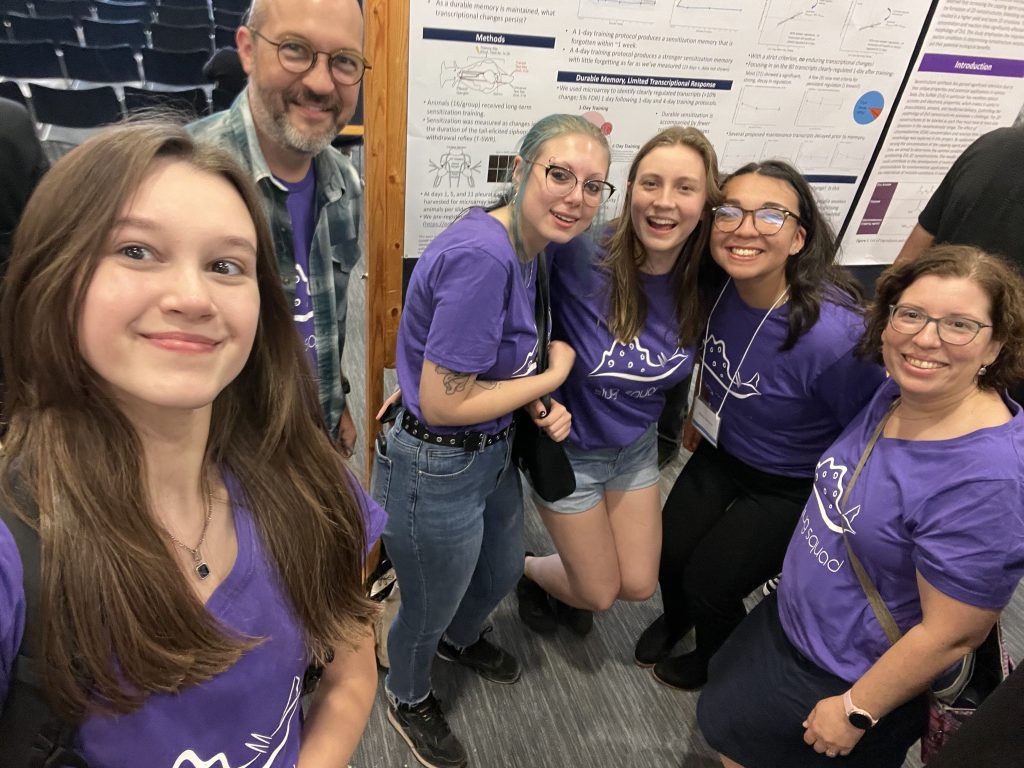
Congrats to the sluglab on another great SFN experience! Below is a photo gallery, including the lab having far too much fun in front of the main meeting sign.


Sluglab 2024 Summer wrapping up
It’s hard to believe the summer research season has come and gone: 10 weeks of ups, downs, and lots of laughs. Overall, it’s been an incredibly productive summer — we made huge progress on our methylation project, perfected our cell-type isolation technique, and have warehoused a bunch of samples that will soon enable us to resolve how the transcriptional correlates of sensitization at the single-cell-type level. It’s been a *lot* of work — lots of training, dissection, RT, qPCR… endless tubes and work. But really exciting!
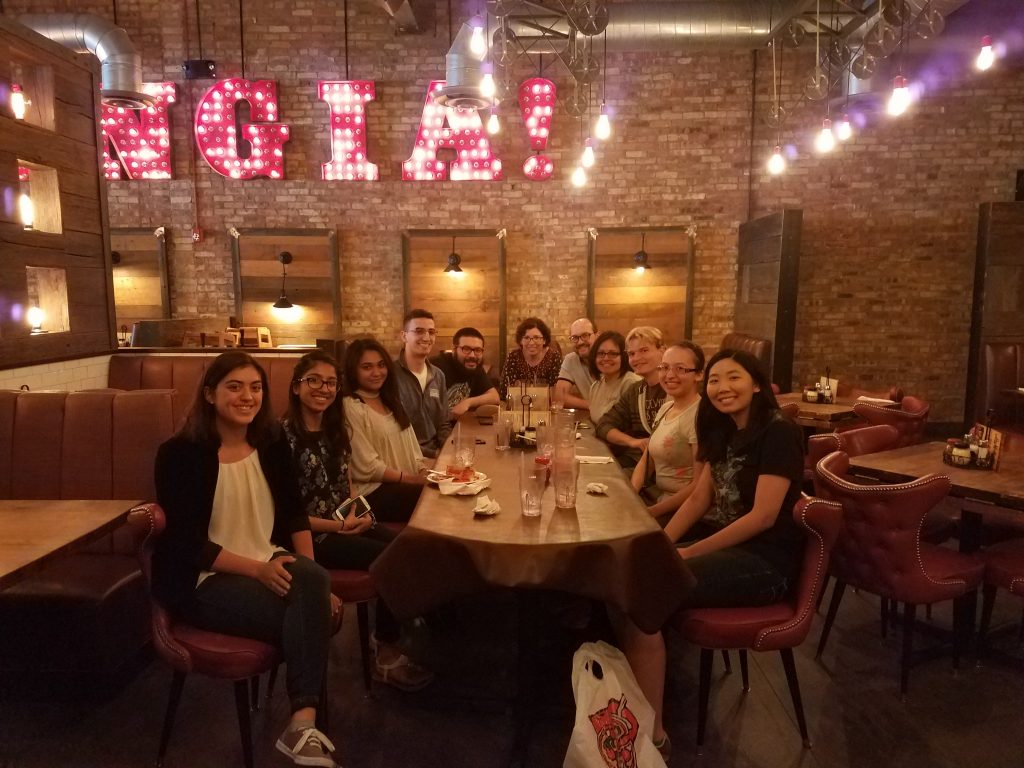
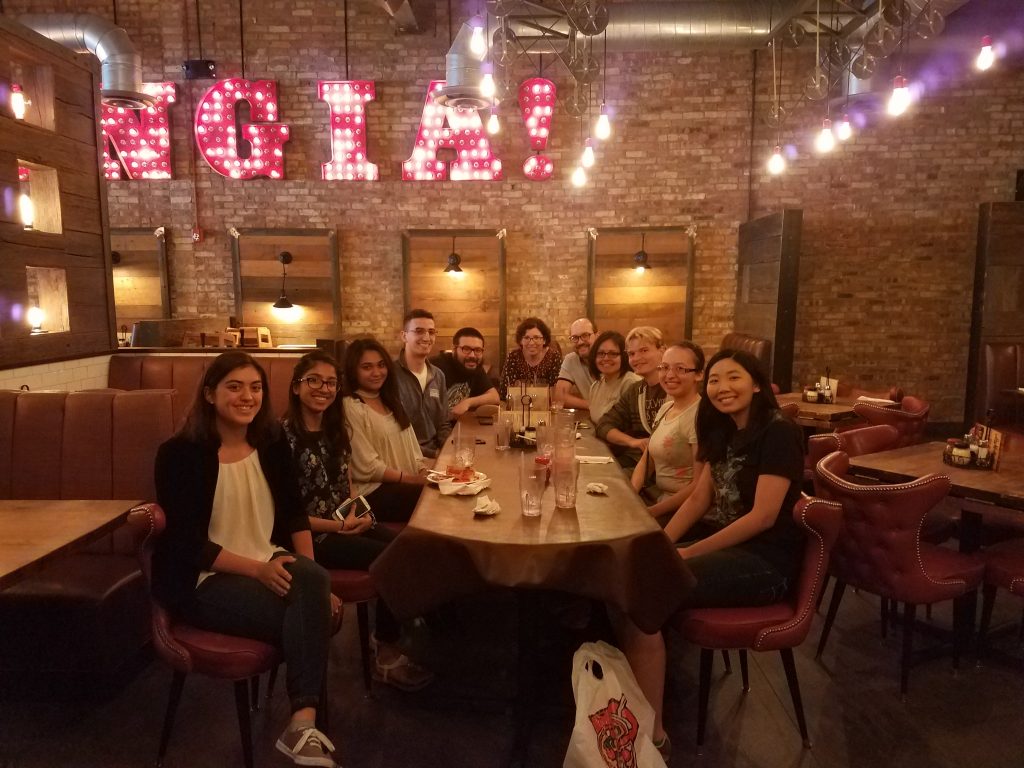
We capped off the last week by a) submitting abstracts for the Faculty for Undergraduate Neuroscience poster session at this year’s Society for Neuroscience meeting and b) having a great lab lunch at Nando’s. We also planned out even more work for the beginning of the fall semester. 🙂
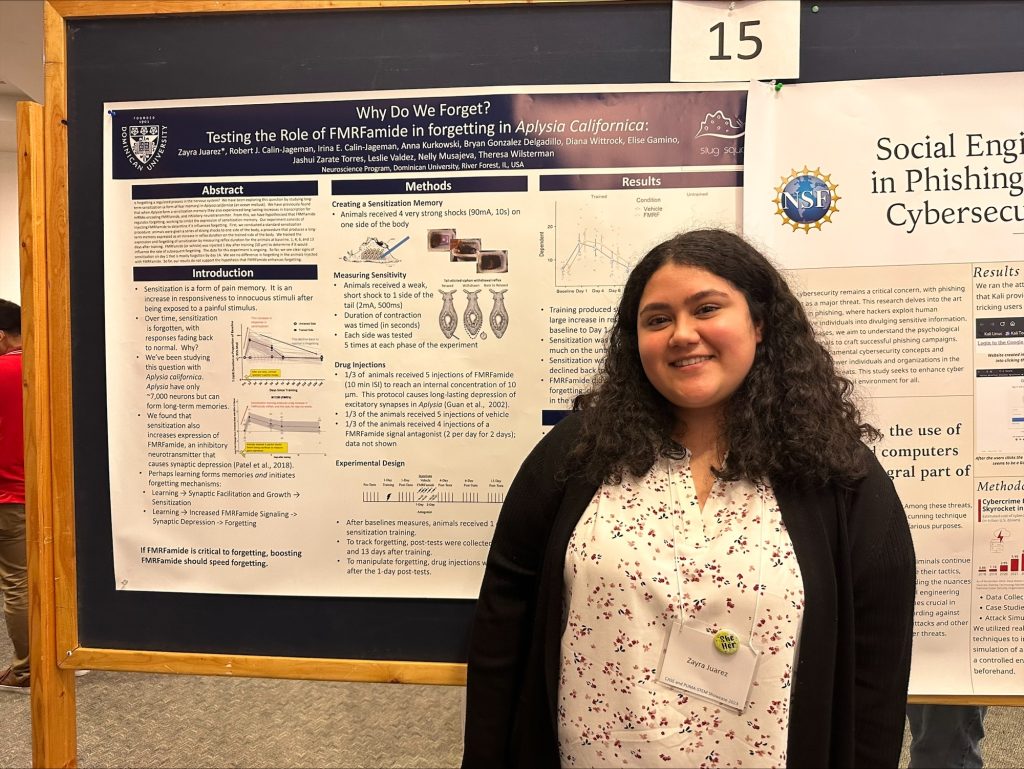
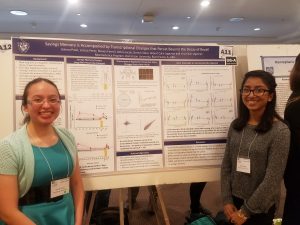
Below or photos from the PUMA-STEM poster session (good job, Elise) and the lab lunch (notice the high fashion of the sluglab t-shirts).


Looks like we’ll be funded!
Doing science isn’t always cheap. The sluglab has been very fortunate to have had multiple rounds of funding from the National Institute of Health to support our research. Specifically, we’ve been supported by R15 grants, a grant program designed specifically for undergraduate-focused labs. These grants are much smaller than the R01s obtained at larger universities (an R01 can be for up to $1 million/year for 5 years; an R15 is a total of $300,000 over 3 years), but they provide an opportunity to fund research with undergraduate researchers (one big complaint about this program, though, is the short timeline — R15s are on a much shorter cycle even though it typically takes *more* time to finish projects in an undergrad-focused lab).
The sluglab has had the good fortune to have strong R15 funding from the NIH. We got started in 2009 with an R15 to study long-term habituation. That project went well (Holmes et al., 2014), but also showed us that we could get more accomplished studying long-term sensitization. So in 2014 we applied for and received funding to study the formation and forgetting of sensitization memory. This project went so well that we renewed it in 2018.
This year (2024), in February, we applied to renew the project again. Putting together a grant application is *tough* — you have to review your progress from the previous grant and then make a good case that you have additional important, clear research questions along with the ability to answer those questions. Fortunately, our last round of funding was really productive — we mapped the transcriptional bases of savings memory (Rosiles et al., 2020), found experimental validation for our dual-process model of forgetting (Calin-Jageman, Gonzalez Delgadillo, et al., 2024; Perez, Patel, Rivota, Calin-Jageman, & Calin-Jageman, 2017), and wrote a new synthesis on the transcriptional mechanisms of sensitization (Calin-Jageman, Wilsterman, & Calin-Jageman, 2024). We also worked hard to develop some really strong new research projects, proposing to compare forgettable and unforgettable forms of sensitization memory with single-cell resolution and to test our theory of forgetting at the cellular level. With a ton of coffee and work, we developed our renewal application and sent it in.
And then we waited. Submission in February gets your grant reviewed in mid-June. You get your scores within a few days, then written comments within a few weeks, then there is a council meeting several months later at which actual funding decisions are made. It is quite a process.
It’s now July, so we still have a ways to go before council and the official decision… but we are excited to share that our grant was very highly scored — in the top 4% of grants reviewed this cycle. That’s not a guarantee, but we can still feel pretty good about ultimately being funded. So: huzzah — the sluglab will have the funding needed to continue training both sea slugs and undergrads, at least for the next several years to come. Can’t wait to see all we can accomplish on this next grant.

- Calin-Jageman, R. J., Gonzalez Delgadillo, B., Gamino, E., Juarez, Z., Kurkowski, A., Musajeva, N., … Calin-Jageman, I. E. (2024). Evidence of Active-Forgetting Mechanisms? Blocking Arachidonic Acid Release May Slow Forgetting of Sensitization inAplysia. Society for Neuroscience. doi: 10.1523/eneuro.0516-23.2024
- Calin-Jageman, R. J., Wilsterman, T., & Calin-Jageman, I. E. (2024). Transcriptional Regulation Underlying Long-Term Sensitization in Aplysia. Oxford University Press. doi: 10.1093/acrefore/9780190264086.013.499
- Holmes, G., Herdegen, S., Schuon, J., Cyriac, A., Lass, J., Conte, C., … Calin-Jageman, R. J. (2014). Transcriptional analysis of a whole-body form of long-term habituation inAplysia californica. Cold Spring Harbor Laboratory. doi: 10.1101/lm.036970.114
- Perez, L., Patel, U., Rivota, M., Calin-Jageman, I. E., & Calin-Jageman, R. J. (2017). Savings memory is accompanied by transcriptional changes that persist beyond the decay of recall. Cold Spring Harbor Laboratory. doi: 10.1101/lm.046250.117
- Rosiles, T., Nguyen, M., Duron, M., Garcia, A., Garcia, G., Gordon, H., … Calin-Jageman, R. J. (2020). Registered Report: Transcriptional Analysis of Savings Memory Suggests Forgetting is Due to Retrieval Failure. Society for Neuroscience. doi: 10.1523/eneuro.0313-19.2020
SlugLab Summer 2024
It’s summer and that means the SlugLab is cooking. This summer we have a great roster of student researchers:
- Elise Gamino, returning for her 2nd summer in the lab
- Diana Wittrock, also returning for her 2nd summer in the lab
- Nelly Musajeva, who is also returning for another summer in the lab
- Carys McFaul, new to the lab this summer, but already fitting right in
I’m a bit delayed in getting this post up in part because we jumped out to such a strong start in the lab this summer. We’ve been working on:
- Identifying the transcriptional changes that occur after forgettable and unforgettable forms of long-term sensitization with single-cell resolution. This is quite a complex and time-consuming project that has required really upping our game in terms of dissection skills and RNA isolation. We’ve got 2 rounds in, and have learned alot — the last 2 rounds of data collection will be critical to getting a big chunk of this project done.
- Tracking the impact of long-term sensitization training on methylation. We’ve been collecting data to help enable us to sort out if there really are learning-induced changes in methylation; we’ll be measuring methylation in CPG islands in the promoters of CREB1 and egr.
- Piloting a project on circadian rhythms in the eye of Aplysia – a project that has so far not been going that great, but which I feel confident we can master.
- Also piloting a project on the impact of sensitization training on heart rate. This has also been off to a rocky start this summer… but fingers crossed we can work this project out.
- Wrapping up our collaboration with the UofI bioniformatics core to produce a new chromosome-length Aplysia genome.
Busy? You bet.
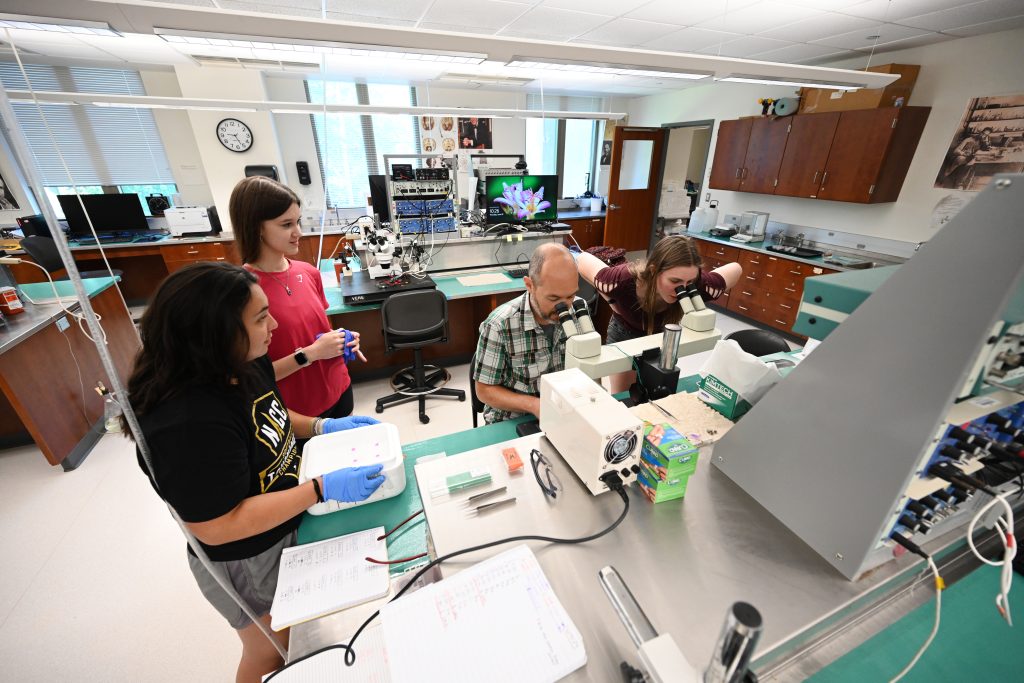
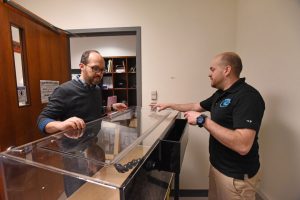
Our DU photographer, Ryan Pagelow, stopped by last week to document the Sluglab in action. Here are the results.